
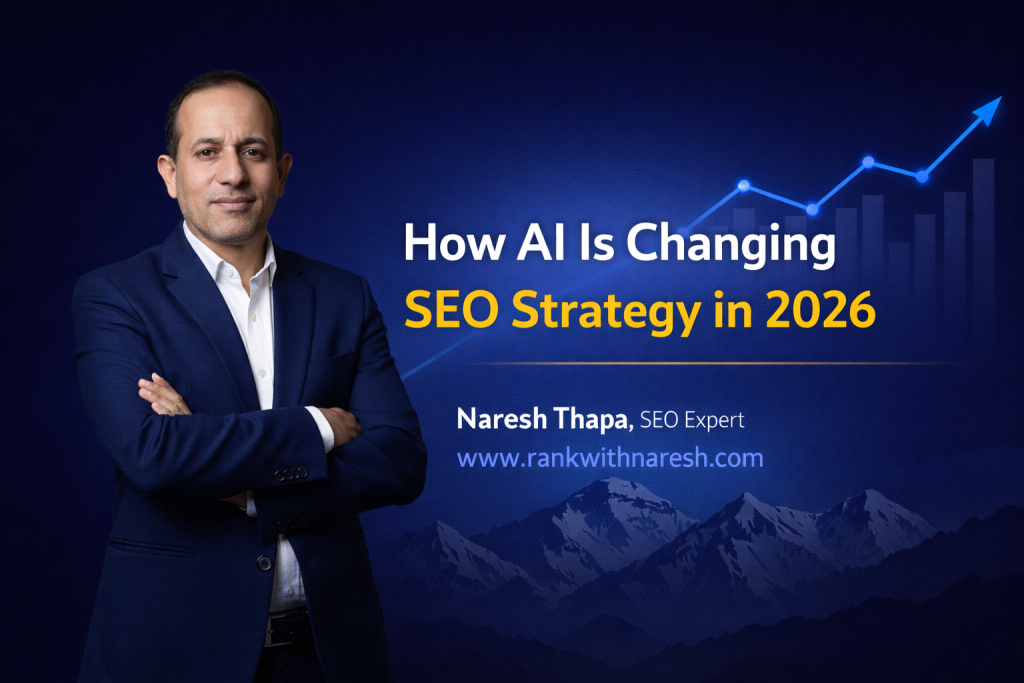
AI SEO Expert in Nepal: How AI Is Changing SEO Strategy in 2025-2026
Quick Answer An AI SEO expert in Nepal optimizes websites for both traditional Google rankings and AI-powered answer engines such as ChatGPT, Google AI Overviews, and Perplexity. The discipline uses three overlapping strategies: Generative Engine Optimization (GEO), Answer Engine Optimization (AEO), and entity-based content structuring. Ranking on Google is no longer enough. Your content must also be structured so that AI systems cite your business when answering user queries.
AI-sourced website traffic increased 527 percent between January and May 2025. That single statistic changes everything about how Nepal businesses need to think about search visibility. The businesses that understand this shift early will dominate both Google results and AI-generated answers across ChatGPT, Perplexity, Google Gemini, and Claude. The ones that ignore it will find themselves invisible to a fast-growing segment of their potential customers.
This article explains exactly what AI SEO is, how it works in Nepal's specific market context, what differentiates an AI SEO expert from a traditional one, and the practical steps Nepal businesses can take to get cited by AI search systems. For a broader foundation on SEO services available in Nepal, the Nepal SEO services overview covers the full spectrum from traditional to AI-powered optimization.
Interested in a career in SEO? I have put together a complete SEO career guide for Nepal covering tools, certifications, salary expectations, and how to land your first client.
What is an AI SEO expert and how is the role changing?
A traditional SEO expert optimizes websites to rank in Google's blue-link search results. An AI SEO expert does that and adds a second layer: optimizing content, entities, and structured data so that AI-powered answer engines cite your business when generating responses to user queries.
The role has expanded significantly since 2024. Google AI Overviews now appear at the top of search results for a growing share of queries, often replacing the organic result that would previously have received the click. ChatGPT and Perplexity answer research questions directly. Claude and Google Gemini handle professional queries. Each of these systems pulls from a different combination of indexed content, training data, and real-time retrieval, and each requires specific optimization strategies to appear in.
What AI SEO experts do that traditional SEO experts do not
The difference is not about replacing one discipline with another. It is about adding a new layer on top of the existing foundation. A qualified AI SEO expert in Nepal brings these additional capabilities:
- Generative Engine Optimization (GEO): Structuring content and entity signals so AI systems choose to cite your business in generated answers
- Answer Engine Optimization (AEO): Writing in direct-answer format that AI extraction systems can lift cleanly from your content
- Entity consistency strategy: Ensuring your business entity is recognized consistently across Google's Knowledge Graph, AI training data, and live search retrieval systems
- Schema markup for AI readability: Implementing JSON-LD structured data specifically designed to communicate with AI parsing systems, not just traditional Google crawlers
- LLM citation research: Using Perplexity and direct ChatGPT queries to track which competitors are currently being cited for your target queries and reverse-engineering why
- Content authority optimization: Strengthening E-E-A-T signals (Experience, Expertise, Authoritativeness, Trustworthiness), which apply equally to Google ranking and AI citation decisions
Why Nepal businesses need AI SEO expertise in 2026
Nepal has 16.6 million internet users. Eighty-five percent of them browse exclusively on mobile. Young Nepali consumers increasingly use ChatGPT for research, Perplexity for professional queries, and Google AI Overviews for local service searches. According to Gartner's research, traditional search volume will drop 25 percent by 2026 as users shift to AI-powered answer engines.
For a Nepal hotel, dental clinic, or professional services firm, this means a potential customer may ask ChatGPT "which is the best dental clinic in Kathmandu?" and accept the answer without ever opening Google. If that clinic is not optimized for AI citation, it does not exist in that user's decision process.
That third statistic deserves particular attention. Forty-six percent of content cited in AI-generated answers does not rank in Google's top 10. This means AI optimization and traditional SEO are partially separate disciplines with different success criteria. A Nepal business can get cited by ChatGPT without ranking on Google page 1, and can rank #1 on Google without being cited by any AI system. Both matter. Only AI SEO experts address both simultaneously.
GEO, AEO, and SAO: the three pillars of AI SEO explained
Three distinct disciplines make up AI SEO. Understanding each one helps Nepal businesses allocate effort where it produces the most visible results. For a complete technical breakdown, the SEO vs AEO vs GEO comparison guide covers the differences in full.
Optimizing your content, entities, and authority signals so that AI systems such as ChatGPT, Google AI Overviews, Perplexity, and Claude choose to include your business in the answers they generate. GEO targets citation within a longer AI-generated response rather than extraction as a single direct answer.
Structuring your content so AI systems can extract a concise, accurate answer to a specific question. AEO powers featured snippets, voice search results, and the direct answer blocks at the top of AI responses. It requires leading every paragraph with the conclusion rather than building toward it.
The emerging discipline of optimizing for AI agents that conduct multi-step research tasks autonomously, such as OpenAI's Deep Research or Google's Agentic Search. SAO is early-stage but growing fast, and is particularly relevant for professional services and B2B businesses in Nepal.
GEO vs traditional SEO: what changes and what stays the same
| Factor | Traditional SEO | GEO (AI SEO) | Both Required |
|---|---|---|---|
| Primary goal | Google blue-link ranking | AI system citation | Yes |
| Keyword optimization | Essential | Supporting signal | Yes |
| Entity consistency | Helpful | Critical | Yes |
| Schema markup | Recommended | Essential | Yes |
| Direct-answer format | Helpful for snippets | Essential for citation | Yes |
| Link building | Essential | Authority signal | Yes |
| E-E-A-T signals | Essential | Essential | Yes |
| Topical authority clusters | Important | Critical for citation | Yes |
| Google top-10 ranking required? | Yes | No (46% cited content does not rank top 10) | Overlap only |
Nepal-specific context Nepal's bilingual search environment adds a layer unique to this market. ChatGPT and Perplexity process both English queries and romanized Nepali queries. A dental clinic in Biratnagar needs entity signals in English ("dental clinic Biratnagar") and recognizable transliterations of Nepali business names. AI systems that are asked in Nepali will source from the same content pool, so English-optimized content with Nepal-specific entities serves both languages simultaneously.
For a complete explanation of what GEO involves as a standalone discipline, the guide on what is Generative Engine Optimization covers the methodology in full with Nepal-specific examples.
How AI SEO actually works: the technical methodology
Understanding the mechanics of AI citation helps Nepal businesses prioritize the right investments. AI systems like ChatGPT and Perplexity retrieve and synthesize content from multiple sources. They evaluate which sources to cite based on five signals.
Entity clarity and consistency
AI language models recognize named entities: businesses, people, locations, products, and concepts. When your business entity appears consistently across your website, Google Business Profile, schema markup, and external mentions, AI systems build a stronger internal representation of your business. A dental clinic whose name, address, and category appear identically across Google, NepalYP, and their website is more likely to be cited when ChatGPT answers "dental clinics in Kathmandu" than one with inconsistent or partial information.
Structured data for AI readability
Schema markup communicates directly with AI parsing systems. When you add JSON-LD schema to your pages, you are not just optimizing for Google's rich results. You are providing structured machine-readable information that AI retrieval systems use to understand what your content is about, who created it, and whether it is authoritative.
The most important schema types for AI citation are: `Article` (with `author` and `dateModified`), `FAQPage` (critical for AEO), `LocalBusiness` (for geographic entity recognition), `Person` (author entity building), and `HowTo` (for procedural content). The skills required for AI search optimization covers schema implementation in practical detail.
E-E-A-T signals in the AI era
Google's Experience, Expertise, Authoritativeness, and Trustworthiness framework applies directly to AI citation decisions. AI systems prioritize citing sources that demonstrate genuine expertise through first-hand experience. This is why an article written by a named SEO expert with documented results gets cited more often than anonymous content or AI-generated text without human attribution.
For Nepal businesses, E-E-A-T signals include: author credentials linked to verifiable professional profiles (LinkedIn, about pages), case studies with documented results, citations from Nepal news portals and industry publications, and client reviews across Google and other platforms. These signals build the trust layer that AI systems use to decide whether your content is citation-worthy.
Content structure that AI systems prefer to cite
AI systems extract answers most efficiently from content written in a specific structure. The principles of AEO require a different approach to writing than traditional SEO content.
- Answer first: State the answer in the first sentence of every section, then explain and support it. AI systems pull the opening statement as the citation candidate
- Definition-first paragraphs: When introducing a concept, define it immediately. "GEO (Generative Engine Optimization) is the practice of..." gives AI a clean definitional anchor to cite
- Concise, specific sentences: AI systems prefer short, precise sentences over complex, clause-heavy constructions. Each sentence should carry one idea
- Named source attribution: When citing statistics or research, name the source explicitly. "According to Gartner's 2024 research..." is more citation-worthy than a vague reference
- Comprehensive subtopic coverage: AI systems cite sources that cover a topic thoroughly. Thin content that touches on a topic without covering it fully gets passed over for more comprehensive sources
For a detailed guide on structuring content specifically for AI search visibility, the AI search visibility guide for 2026 covers the full content architecture approach.
How to optimize your Nepal business for AI search: 6 practical steps
These six steps apply to any Nepal business regardless of size or industry. Work through them in order. Each builds on the previous one. For a deeper implementation guide specifically on ChatGPT optimization, the complete guide to optimizing content for ChatGPT in 2026 covers each step technically.
Establish consistent entity signals across all platforms
Your business name, address, phone number, and description must be identical across your website, Google Business Profile, social media profiles, and every Nepal directory where you appear. AI systems cross-reference these signals to build their internal representation of your business entity. Inconsistency reduces citation confidence. Start with a NAP audit and standardize your entity information before any other AI SEO work.
Implement comprehensive schema markup on all key pages
Add JSON-LD schema to every important page on your website. Your homepage needs LocalBusiness and Person schema. Blog posts need Article schema with author attribution. FAQ sections need FAQPage schema. Service pages need Service schema. This markup does not guarantee AI citation, but its absence significantly reduces the probability of it. Schema is how you communicate your business identity and content meaning directly to AI parsing systems.
Rewrite key content in direct-answer format
Audit your existing pages and identify where you bury the answer in explanatory preamble. Rewrite those sections so the answer comes first. For a dental clinic: instead of "We have been serving Kathmandu patients since 2015 and offer a wide range of services including..." write "Koshi Dental provides root canal, teeth whitening, and orthodontic services in Biratnagar." The second version is immediately extractable by an AI system. The first requires interpretation.
Build a topical authority content cluster
AI systems cite sources that demonstrate comprehensive knowledge of a subject. A single page about your services is not sufficient for AI citation on competitive queries. You need a cluster of articles that collectively cover every angle of your industry in the Nepal context. A dental clinic should have articles on types of dental procedures, dental care for Nepali children, dental costs in Nepal, how to choose a dentist in your city, and FAQ content addressing common patient questions. Each article strengthens the cluster's overall citation authority.
Earn authoritative citations from Nepal sources
AI training data and live retrieval systems both weight authoritative source citations heavily. A mention of your business in a Nepal news portal, a link from a respected industry association, or a citation in an academic or government document carries significantly more weight than a generic directory listing. Invest in digital PR: contribute expert commentary to The Himalayan Times, Republica, or Nepali industry publications. These mentions become part of the authoritative source layer that AI systems draw from.
Monitor and track your AI search visibility
Track which AI systems are currently citing your competitors for your target queries. Open ChatGPT, Perplexity, and Google AI Overviews and ask the questions your customers ask. Record who gets cited and why. Then use that intelligence to identify the specific content or entity signals your site is missing. Run this audit monthly. AI citation patterns shift as AI systems update their retrieval algorithms and training data. Monitoring is not optional. It is the feedback loop that guides where to invest next.
AI SEO tools Nepal experts use in 2026
The right tools do not replace strategic judgment about Nepal's market. They amplify the speed and accuracy of work that still requires human expertise. Here are the specific tools that AI SEO specialists in Nepal use and what each one contributes.
Used for content ideation, JSON-LD schema generation, FAQ drafting, keyword clustering, and competitor citation research by querying ChatGPT directly for target queries.
Used to identify which businesses, websites, and sources Perplexity currently cites for Nepal-specific queries. Reveals content gaps and citation opportunities before content is created.
Backlink analysis, keyword gap identification, content gap analysis, and topical authority mapping. The traditional research layer that underpins AI SEO strategy.
AI Overview tracking (available in some markets), competitor content analysis, and SERP feature monitoring. Used alongside Ahrefs for full competitive coverage.
Natural language processing analysis of content against top-ranking pages. Identifies semantic gaps, entity coverage gaps, and NLP term usage to improve AI readability.
Tracks AI Overview impressions and clicks where available. Shows which queries trigger AI answers for your pages and which pages receive AI-driven traffic.
Tools do not replace market knowledge No AI tool understands that "dentist Thamel" and "dentist Thamel Kathmandu" have different competitive landscapes, or that searches in Nepali romanized text require different keyword targeting than English queries. Nepal-specific market knowledge cannot be automated. The tools above accelerate the work. The strategic decisions still require a specialist who understands how Nepal's digital market actually behaves.
Does AI replace SEO experts in Nepal? The honest answer
No. AI amplifies the productivity of SEO experts. It does not replace their judgment, local market knowledge, or the authentic experience signals that both Google and AI systems use to evaluate trustworthiness.
Here is what AI cannot do for Nepal SEO:
- Understand Nepal's bilingual search behavior: the specific overlap of English queries, romanized Nepali, and Devanagari script patterns across different demographics
- Build authentic relationships with Nepal journalists, bloggers, and directory owners for link acquisition
- Generate genuine E-E-A-T signals: the first-hand experience, documented results, and professional credentials that AI citation systems evaluate
- Make judgment calls about which of two strategies fits a specific Nepal business's market position, budget, and competitive context
- Earn the trust of actual Nepal customers whose reviews are the primary local prominence signal
What AI does very well:
- Drafting schema markup and FAQ content at scale
- Generating keyword clusters from a seed topic
- Identifying content gaps by analyzing competitor pages in seconds
- Running technical SEO audits and producing prioritized fix lists
- Accelerating content production while a human expert maintains quality and authenticity
The result is that strong AI SEO experts in Nepal become significantly more productive, not unemployed. A professional who previously handled 5 to 8 client accounts can now manage 12 to 15 with the same quality, using AI tools to automate the repetitive layers while focusing human judgment on strategy, relationships, and the Nepal market knowledge that no tool can replicate.
The real risk for Nepal businesses The risk is not that AI replaces SEO experts. The risk is that Nepal businesses assume their existing Google-focused SEO strategy still covers all search channels. It does not. A business with strong Google rankings but no AI optimization is visible to 75% of search users today. By 2026, that share shrinks as AI usage grows. Businesses that integrate AI SEO now build an advantage that compounds. Those that wait will find AI citation positions already occupied by early movers.
Real results: Nepal businesses cited in AI-generated answers
The situation: A Pokhara-based trekking company with strong Google rankings for "Upper Mustang Jeep Tour" but zero visibility in AI-generated answers. When potential clients asked ChatGPT or Gemini about Upper Mustang tours, competitors were cited instead.
What the AI SEO campaign involved: Entity clarity audit and NAP standardization across all platforms. Article, TourOperator, and LocalBusiness schema added to all service pages. FAQ content written in direct-answer format targeting the specific questions ChatGPT users ask about Upper Mustang. Topical authority cluster built across Mustang trekking, permits, costs, best seasons, and itineraries. Digital PR outreach resulting in mentions in three Nepal travel publications.
The result: Within 4 months, the operator appeared in ChatGPT and Google Gemini responses when users asked about Upper Mustang Jeep tours. Google AI Overview appearances for primary tour keywords increased. Direct inquiries from international travellers who found the business through AI-generated recommendations grew measurably. For international clients needing GEO services, the Nepal GEO optimization services page covers this specialization in detail.
This case demonstrates the 46 percent principle in practice. The company already ranked well on Google. But AI citation required a separate, targeted optimization strategy. Both visibility layers now work together, capturing users at different stages of the research and decision process.
AI SEO and local SEO in Nepal: how they work together
AI search and local search are converging faster than most Nepal businesses realize. When a user asks Google AI Overviews "best dentist near me in Kathmandu," the AI draws from local entity signals as well as content authority. A business with strong local SEO in Nepal, including Google Maps rankings, consistent citations, and strong reviews, has a structural advantage in local AI citations over a business with only national content authority.
This is the most important intersection for Nepal service businesses to understand. Your Google Business Profile, local citations, and review signals are not just local SEO assets. They are entity authority signals that AI systems use to decide whether to recommend your business in AI-generated local search answers.
A hotel in Pokhara with 180 Google reviews, consistent NAP across directories, and entity-aligned website content is significantly more likely to appear when a traveler asks Perplexity "best boutique hotel in Pokhara" than one with better content but weaker local entity signals. AI SEO and local SEO must be planned together, not separately.
FAQ: AI SEO expert Nepal
What is an AI SEO expert in Nepal?
An AI SEO expert in Nepal is a specialist who optimizes websites for both traditional Google rankings and AI-powered answer engines such as ChatGPT, Google AI Overviews, Perplexity, and Claude. The role uses Generative Engine Optimization (GEO), Answer Engine Optimization (AEO), and entity-based content strategies to ensure a business gets cited in AI-generated answers. The SEO expert Nepal page covers the full scope of services including AI optimization.
How is AI changing SEO strategy in Nepal?
AI is changing SEO in Nepal by shifting user behavior from clicking Google blue links to accepting direct AI-generated answers. Gartner predicts traditional search volume will drop 25% by 2026. For Nepal businesses, ranking #1 on Google is no longer sufficient. Content must also be structured so that ChatGPT, Perplexity, and Google AI Overviews can understand, trust, and cite it. The AI search visibility guide for 2026 explains exactly what this shift means for Nepal business strategy.
What is GEO and why does it matter for Nepal businesses?
GEO stands for Generative Engine Optimization. It is the practice of structuring your content, entities, and schema markup so that AI-powered search engines include your business in their generated answers. For Nepal businesses, GEO matters because a growing share of potential customers now ask AI tools for recommendations before searching Google. The comprehensive guide on what is Generative Engine Optimization covers the methodology with Nepal-specific examples.
Does AI replace SEO experts in Nepal?
No. AI amplifies SEO expert productivity but cannot replace strategic judgment, Nepal market knowledge, or authentic E-E-A-T signals. What AI cannot do: understand bilingual Nepali search behavior, build relationships for local link acquisition, or establish the genuine expertise signals that both Google and AI citation systems evaluate. AI SEO experts use AI tools to work faster and more accurately. Strategic decisions remain human-led.
How do I get my Nepal business cited by ChatGPT or Perplexity?
To get cited by ChatGPT or Perplexity: establish consistent entity signals across your website and Nepal directories, add comprehensive FAQ, LocalBusiness, and Article schema markup, write direct-answer opening paragraphs, build topical authority through a content cluster, and earn citations from authoritative Nepal sources. The guide to optimizing content for ChatGPT in 2026 covers each step technically.
What is the difference between GEO and AEO?
GEO (Generative Engine Optimization) targets citation within longer AI-generated answers. AEO (Answer Engine Optimization) targets extraction as a single direct answer in featured snippets, voice results, or AI direct-answer blocks. GEO optimizes for inclusion in a generated response; AEO optimizes for becoming the answer itself. The full comparison covering SEO, AEO, and GEO differences is in the SEO vs AEO vs GEO guide.
How much does AI SEO cost in Nepal?
AI SEO services in Nepal, including GEO and AEO optimization, are typically included in premium SEO packages ranging from NPR 50,000 to NPR 90,000 per month. Standalone GEO audits cost NPR 20,000 to 40,000 as one-time projects. Most Nepal businesses bundle AI optimization with their existing SEO retainer. For full SEO and AI optimization services in Nepal, the services page covers all package options and pricing.
Which AI tools do SEO experts in Nepal use?
Nepal AI SEO experts use ChatGPT for content drafting and schema generation, Perplexity AI for citation research, Ahrefs and SEMrush for keyword and competitive analysis, SurferSEO or NeuronWriter for NLP content optimization, and Google Search Console for AI Overview tracking. The skills required for AI search optimization covers tool selection and workflow in detail.
Ready to make your Nepal business visible in AI search?
Get a free GEO audit showing which AI systems currently cite your competitors for your target queries and what your content is missing to compete.
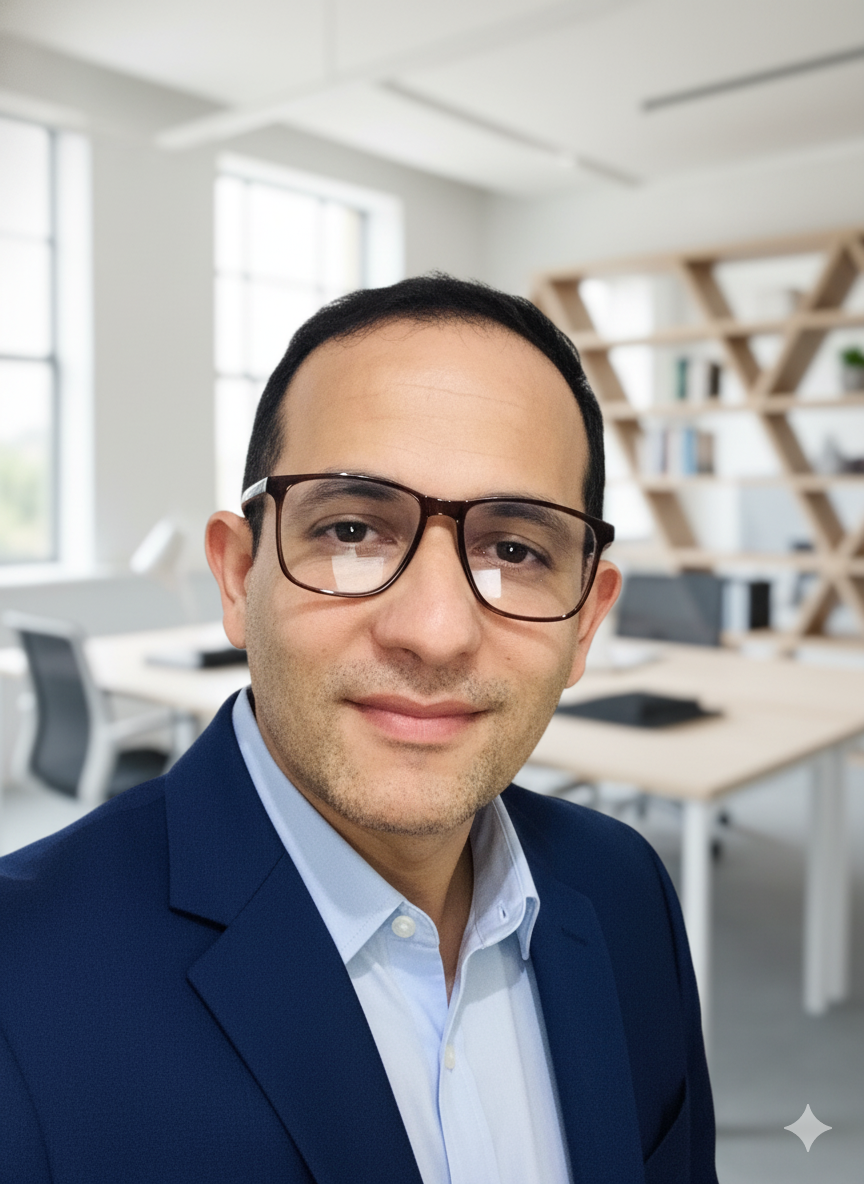
AI SEO expert and GEO specialist based in Biratnagar, Nepal with 5+ years of experience helping Nepal businesses achieve visibility in both traditional Google search and AI-powered answer engines. He is among the first SEO professionals in Nepal to specialize in Generative Engine Optimization, having delivered AI citation results for tourism, healthcare, hospitality, and professional services businesses.
He leads RankwithNaresh, providing SEO and AI optimization services across Nepal and GEO services for international clients targeting Nepal audiences.